The gentle revolution of pencils, a meeting of wisdom between wood and lead, and an unexpected beauty.
The Evolutionary Journey and Philosophical Wisdom of Rubber
The value of a pencil is never limited to simply being “a pencil.”
Pencil: A Gentle Revolution from the Forest to the Desk
The morning light filters through the window frame, casting a diamond-shaped pattern on the desk. A wooden pencil lies quietly beside the lined notebook. The pen’s shaft still bears the fine lines left by the knife used to sharpen it the previous night, and the eraser at the top is covered in a thin layer of pencil dust, as if it had just completed a mission. This seemingly ordinary writing instrument conceals a story that is even more enduring than that of a lead core.
I. The Encounter of Wood and Lead: A Symphony of Nature and Wisdom
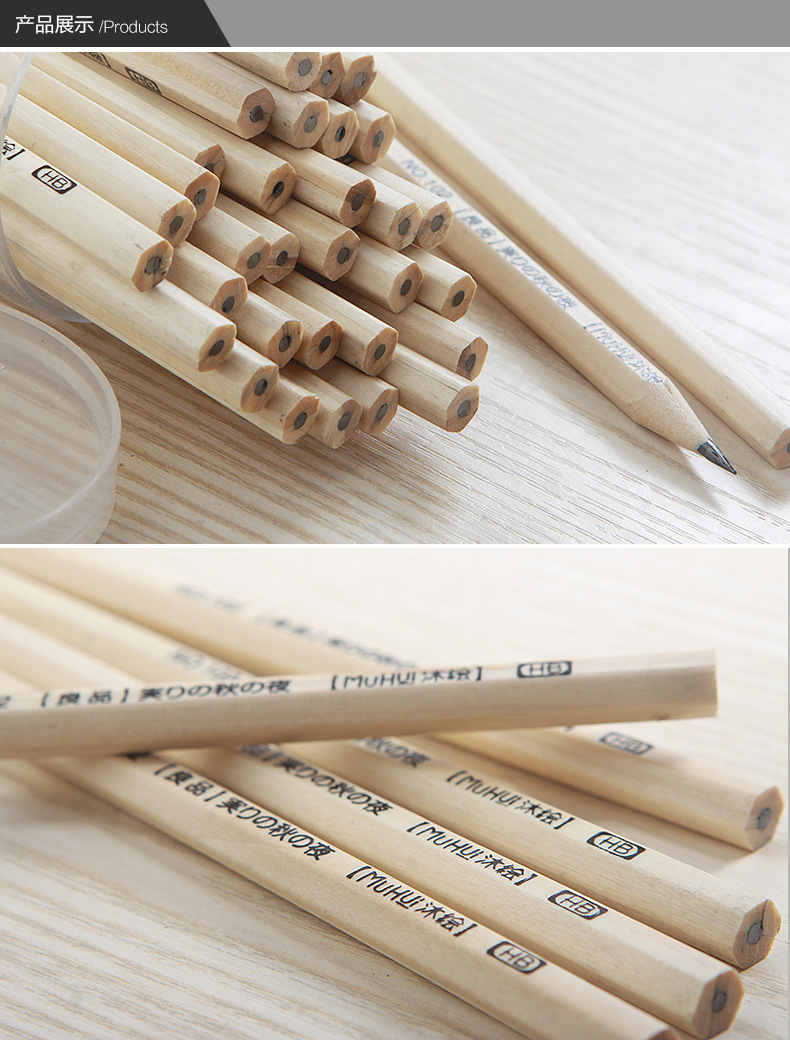
The body of the pencil is made of the gentle wood of beech. The cedar, harvested from northern California or Oregon, undergoes over twenty processes of steaming, slicing, bonding, pressure application, and cutting before becoming the lightweight pencil shaft in our hands. Amid the sweet fragrance of the wood, one can almost hear the breath of the forest – each pencil serves as a continuation of the trees’ observation of the world.
The emergence of graphite-lead cores was even a miracle. This seemingly simple black substance is, in reality, a crystalline structure formed from carbon elements under high temperatures and pressures. In the 18th century, German craftsmen discovered that when graphite was mixed with clay, it could maintain smooth writing while also controlling hardness, thus giving rise to a hardness spectrum ranging from 6B to 9H. As the pencil scrapes across the paper, the graphite crystals peel off layer by layer, leaving varying depths of marks between the fibers, much like creating artwork on paper using minerals.
The most fascinating part was the process of sharpening the pencil. The pencil sharpener “clacked” as it consumed the wooden shavings, and the curly wood shavings fell like the willow twigs of spring, revealing the silver-gray lead core. This process was imbued with a sense of Zen: the more one desires to touch truth, the more one must learn to temper one’s sharpness. Once, I sharpened the pencil too much, and the tip “popped” off onto the equals sign of a math problem. The lead core shattered into tiny stars. The teacher picked up the broken lead and said, “See, the pencil teaches us humility.”
II. Footprints on Paper: The Invisible Hand of Civilization
When a pencil dances on paper, it always accompanies it with a rustling sound. From the red-ink practice of the Enlightenment period to the formula derivations of scientists and the sketch creations of artists, it has always been humanity’s most faithful companion. Leonardo da Vinci drew sketches of flying machines with a pencil, Vincent van Gogh sketched the initial concept of “Starry Night,” and Albert Einstein wrote the formulas that would change the world on a piece of scratch paper.
In art class, pencils are the most magical of magicians. When using an HB pencil to sketch, it can produce twenty different shades of gray, ranging from the highlights on a plaster statue to the shadows on the undergarment. Once, while drawing “My Teacher,” I accidentally drew the teacher’s glasses frame crooked. I was so upset that I started crying. The art teacher, however, picked up my pencil and added some purple wisteria strokes next to the crooked lines. “See,” she said, “even mistakes can bloom into beauty.” That painting was later hung on the back wall of the classroom, and the purple wisteria imprinted by the pencil became one of my most unforgettable “unexpected beauties.”
The gentleness of a pencil also lies in its ability to be corrected. When mistakes are made with a pen or ballpoint pen, correction fluid or tape is often required. In contrast, a pencil can simply be wiped away, restoring the paper to its pristine state. This inclusivity has given pencils an irreplaceable position in the field of education – children can write and erase with confidence, growing through trial and error.
III. The Philosophy of Erasers: Wisdom in Error and Correction
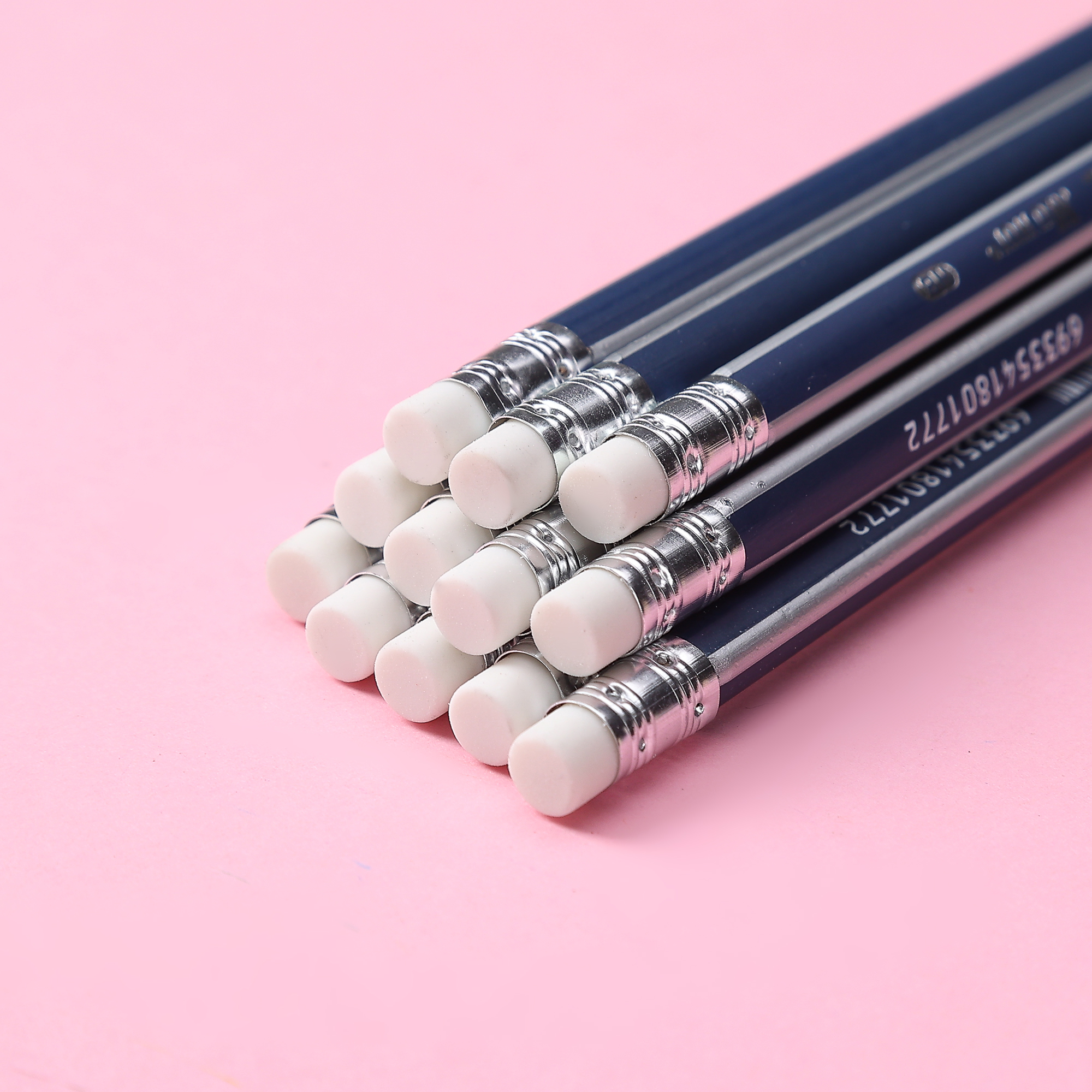
The eraser at the tip of a pencil is always quietly tidying up the mess. When you make a mistake with your answer during an exam, the eraser “squeaks” as it removes the ink, leaving a faint pink stain, akin to applying a band-aid to the page. This design is incredibly clever: it reminds us that mistakes are a natural part of growth, and it’s essential to have the courage to correct them.
Once, my deskmate used my eraser to remove ink marks on a piece of paper. As a result, he made a hole in the paper. Just as I was about to get angry, he handed me a new eraser with a flushed expression. “I’ll make it up to you! This one is 4B grade and can clean up ink marks without damaging the paper.” Now, that eraser with the tooth marks still lies in my pencil case, serving as a reminder that tolerating others’ mistakes, just like an eraser tolerating mistakes in writing, can make relationships more harmonious.
The material of erasers has also undergone changes. Initially made from crumbs, they were later replaced with rubber, and now use synthetic materials. This evolution is a microcosm of humanity’s pursuit of perfection and environmental protection – we must not only effectively correct errors but also reduce our burden on the environment.
IV. The Modern Relevance of Pencils: Finding Warmth in the Digital Age
In a world where keyboard clicks have replaced the sound of writing, the pencil retains its unique charm. It requires no batteries or internet connection; all it needs is a pen and paper to embark on a journey of creativity. Psychologists have found that handwriting activates more areas of the brain, enhancing memory and creativity.
Last week, while sorting through old belongings, I came across my grandfather’s notebook from the Korean War era. The yellowed pages were marked with red and blue pencils indicating the route of the march. Although the pencil writing has faded, it is still possible to discern the force with which it was written – some strokes were so deep that they even cut through the back of the paper. Grandfather said, “At that time, a pencil had to be broken into three sections to use. We would write on the front side and then switch to the back side, using a bamboo tube to continue writing with the pencil tip.” It turns out that pencils were not just used for writing; they also served as a means to record one’s faith amidst war and to depict the hope of a bountiful harvest during times of famine.
V. Conclusion: The Enduring Value of a Pencil
From the forest to the desk, the pencil has undergone a transformation from nature to civilization. It teaches us humility, tolerance, and correction, reminding us not to forget the warmth of handwriting while striving for efficiency. In this digital age, perhaps we need a pencil even more—not to replace the keyboard, but to rediscover the original spirit of creativity.
The next time you pick up a pencil, take a moment to appreciate the texture of the wood, the feel of graphite, and the gentleness of the eraser. This humble writing tool embodies humanity’s eternal quest for knowledge, beauty, and truth.
